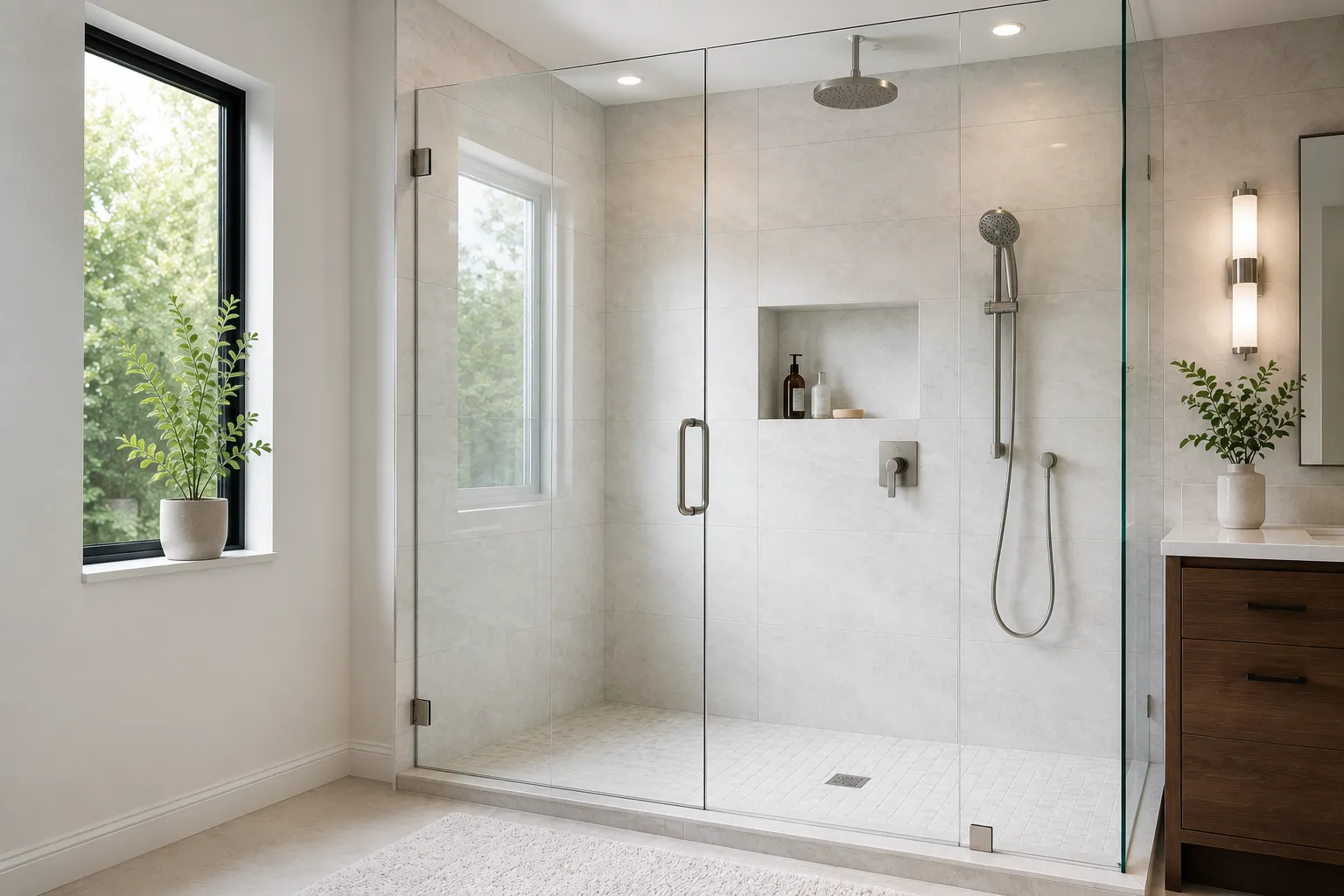
Frameless shower glass looks great when it is new.
Clear. Open. Clean.
Then the worry starts. Is it going to stay that way, or will it turn cloudy in six months and become one more thing you have to scrub?
Fair concern.
Glass shows everything: water spots, soap marks, fingerprints, that dull film that seems to appear out of nowhere. But cloudy glass is usually not a mystery, and it is not “worn out” glass. Most of the time, it is hard water drying on untreated glass again and again.
Good news, though. That can be managed. A protective coating helps. A small daily habit helps even more. Nothing dramatic. Just the right setup and a little consistency.
Key Takeaways
- Cloudy shower glass usually comes from hard-water minerals, not old glass.
- A factory-applied coating makes the glass easier to clean and helps prevent etching.
- A quick squeegee after each shower beats a big cleaning session later.
Why Shower Glass Spots and Clouds
Hard water is the main problem.
Much of NJ has water with minerals in it, usually calcium and magnesium. You do not really see them while the shower is running. The glass looks fine when it is wet.
Then the water dries.
Those minerals stay behind as tiny white marks. One shower is nothing. A month of showers? Now you start seeing spots. Add soap scum, shampoo residue, body oils, and poor ventilation, and the glass begins to look cloudy.
There are two levels of damage here.
Surface buildup is the easier one. It sits on top of the glass and can usually be cleaned.
Annoying? Yes.
Preventable? Also yes.
That is why frameless shower glass cleaning should start before the enclosure looks bad.
Protective Coatings: The Smart Early Fix
A shower glass coating gives the surface a protective layer, so water has a harder time sticking. Instead of sitting flat on the glass and drying there, droplets bead up or slide off more easily.
Is it magic?
No. You still need to clean the shower.
But it makes the whole job easier. Soap residue sticks less. Minerals build up more slowly. Water spots are less stubborn. In a real household, that matters.
The best time to apply a coating is during fabrication, before the glass is installed. The glass is clean, new, and ready for treatment. A factory-applied coating usually bonds better and lasts longer than a DIY spray.
DIY sprays can help for a while, sure. But they wear down faster, and if the glass already has buildup, you are not starting with a clean surface.
If you are planning a new enclosure, ask about adding coating to your Frameless Shower Door / Custom Glass Shower Doors service. For hard water shower glass, it is one upgrade that actually earns its keep.
Not flashy.
Useful.
The Routine That Actually Works
People want a secret product.
There really is not one.
The best tool is still a squeegee. Deeply boring. Very effective.
After each shower, pull it down the glass from top to bottom. Wipe the bottom edge if water sits there. Dry the handle and hinges if they collect droplets.
That is it.
Ten seconds.
Use this quick shower glass care checklist:
- Squeegee after every shower.
- Wipe the bottom edge.
- Dry handles and hinges.
- Leave the door slightly open.
- Run the bathroom fan.
- Clean once a week with a safe glass cleaner.
- Use microfiber, not rough pads.
This works because it removes water before minerals dry on the glass. Fewer dried droplets means fewer spots. Fewer spots means less scrubbing later.
Careful, though. Vinegar can bother natural stone and some metal finishes. Use it neatly, rinse well, and dry the area.
Cleaning Products to Use and Avoid
A lot of glass damage happens during “serious cleaning.” Too much pressure. Too rough a pad. Too harsh a chemical.
The glass may look tough, but coatings can wear down and the surface can scratch.
Use:
- Coating-safe glass cleaner
- Mild vinegar-based cleaner on untreated glass
- Soft microfiber cloths
- Rubber squeegee
- Non-abrasive sponge
- Warm water for quick wipe-downs
Avoid:
- Steel wool
- Abrasive powders
- Rough scouring pads
- Ammonia on coated glass
- Bleach-heavy cleaners
- Harsh acidic cleaners near stone
- Anything gritty
If you are wondering how to clean glass shower doors without damaging them, start gentle. Spray. Wait a minute. Wipe with microfiber. Rinse if needed. Dry the glass.
That final dry wipe matters. If rinse water dries on the surface, you have basically restarted the spotting cycle.
Rude, but true.
When to Call a Pro
Light spots? Handle them yourself.
A mild cleaner and soft cloth should usually do it. If the buildup has been sitting for a while, you may need more than one round.
Heavy white film is different. You can try a safe hard-water cleaner, but do not start scrubbing like the glass owes you money. Scratches are worse than spots.
If the glass stays dull after cleaning, it may be etched. That is when a pro makes sense. Restoration may improve the surface. Re-coating may help protect it going forward. But deep etching is not always reversible.
That is the honest answer.
Some glass can be cleaned. Some can be improved. Some needs replacement if it was neglected too long.
For a fuller guide to enclosure options and installation, read the main post on Custom Glass Shower Enclosures.
Keeping the Glass Clear Long-Term
A frameless shower can stay clear for years. It just needs the right plan from the beginning.
Hard water will keep showing up. Soap residue too. So the goal is simple: do not let either one sit on the glass long enough to cause damage.
For new frameless shower installs across NJ and NYC, protective shower glass coating is a smart add-on. Existing showers may also benefit from professional cleaning or re-coating, depending on the condition of the glass.