A small Bronx bathroom forces every decision into a corner. The door you pick either works with the layout or quietly eats up the little space you have. Standard swinging doors feel fine on paper, then block movement in real life. That’s where smarter solutions come in. The right shower doors for small bathrooms don’t just fit – they change how the room functions. This guide breaks down practical layouts, space-saving shower enclosures, and the exact glass thickness for showers that actually holds up. If you’re planning an upgrade, start with what your space can realistically handle, then build from there. You can also review available options through the service page to get a clearer sense of what fits your layout.
Key Takeaways
- Sliding shower doors Bronx – move along a track, so you don’t lose clearance space
- Corner and neo-angle enclosures – turn unused corners into functional shower zones
- Glass thickness for showers – affects stability, safety, and long-term durability
- Professional installation – critical for uneven walls and tight apartment layouts
What is a Small Space Shower Solution?
A small space shower solution is not a smaller version of a standard setup. It’s a system designed specifically for tight layouts, awkward angles, and limited movement space. In Bronx apartments, that usually means working around walls that aren’t perfectly straight and floors that slope just enough to cause problems later.
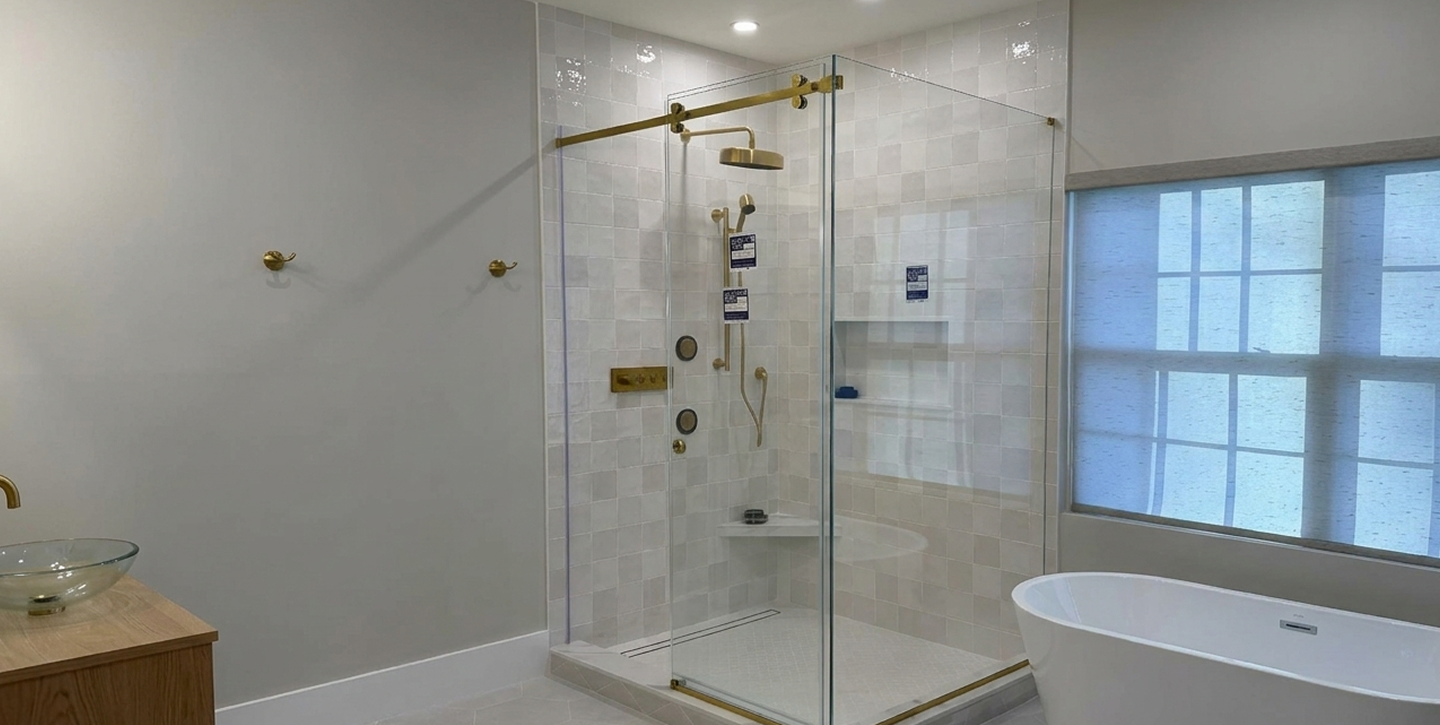
This is where frameless shower enclosures come in. They remove bulky metal framing and rely on thicker, structural glass. The result feels lighter, even when the footprint stays the same. More light moves through the room. Edges feel cleaner. The bathroom doesn’t shrink visually the moment you install it.
What matters here is proportion. Thick glass without heavy framing gives you structure without visual weight. That balance is what makes small bathrooms feel usable instead of cramped.
Professional Glass Thickness & Usage Guide
Glass thickness isn’t a detail you leave to guesswork. It directly affects how stable the door feels, how well it seals, and how long it lasts before something shifts out of alignment.
Here’s the standard breakdown:
| Glass Thickness | Common Usage |
| 4mm | Lightweight panels, non-structural use |
| 6mm | Shelving, splashbacks, light applications |
| 8mm | Standard shower enclosures and screens |
| 10mm | Frameless shower doors and premium installations |
| 12mm | Structural glass walls and heavy partitions |
For most small apartments, 8mm is the baseline. It works, but it doesn’t always feel solid in frameless designs. 10mm is where things start to feel stable. The door holds its position. Hinges don’t strain. Movement stays smooth.
12mm exists for structural builds. In a tight Bronx bathroom, it often adds unnecessary weight unless the design specifically calls for it. More thickness doesn’t automatically mean better performance. It has to match the layout and mounting conditions.
The Risks of Delaying Your Shower Upgrade
A worn shower setup doesn’t fail all at once. It leaks a little. It traps moisture. Then it builds into something harder to fix.
The most common issue is water escaping past curtains or poorly fitted doors. In a small bathroom, that water doesn’t have anywhere to go. It settles into floor seams, baseboards, and corners that stay damp longer than they should. Over time, that turns into mold. If you’ve ever looked into proper mold prevention, you already know how persistent it gets once it starts.
There’s also the property angle. In the Bronx rental market, small upgrades carry more weight than people expect. A clean, modern shower enclosure signals maintenance. A worn curtain setup signals the opposite. It changes how a space is perceived, even before someone notices the details.
How Professional Installation Prevents Bigger Problems
Installation is where most issues begin. A door can be perfectly built and still fail if it’s installed against uneven walls or anchored incorrectly.
In small bathrooms, tolerances are tighter. A few millimeters off, and the door doesn’t close cleanly. Water finds its way out. Hardware starts to loosen under stress.
A professional install handles that upfront:
- Glass thickness is matched to the wall structure and mounting points
- Anchors are set based on real wall conditions, not assumptions
- Panels are leveled to account for uneven floors
- Seals are applied where water actually tries to escape
If you’re planning an upgrade, book a proper measurement before choosing a design. You can request one directly through the contact page and get a layout-specific recommendation instead of guessing.
Sliding Shower Doors for Narrow Layouts
Sliding doors solve a very specific problem. They don’t need space to open outward.
Instead of swinging into the room, the panels move along a track. That keeps the walkway clear, which matters in narrow Bronx bathrooms where every inch counts.
They work best in layouts where the shower runs along one wall. Especially in tub-to-shower conversions, sliding systems fit naturally without forcing changes to the rest of the space.
What you get in return:
- No door swing interfering with movement
- Consistent alignment along the track
- Better water containment compared to curtains
- Easier use in tight daily routines
Tracks do require maintenance. That’s the trade-off. But in small layouts, the space you save usually outweighs the upkeep.
Corner Enclosures for Optimized Footprints
Corners are often wasted. A corner enclosure turns that dead space into a functional shower area without blocking the rest of the room.
Neo-angle and quadrant designs are the most common options here. They cut across the corner instead of following straight walls, which opens up the center of the bathroom.
These systems usually use 8mm to 10mm glass. That range keeps the structure stable without making the unit feel heavy.
Why they work in small apartments:
- They free up central floor space
- They reduce visual clutter with cleaner lines
- They adapt to irregular layouts more easily
- They create a defined shower zone without enclosing the whole room
A well-placed corner unit changes how the entire bathroom moves. You stop working around the shower and start working with it.
How to Choose a Shower Door Service in the Bronx
Most people focus on the door and overlook the service behind it. That’s where problems slip in.
A good installer doesn’t just measure width and height. They account for wall conditions, floor slope, and how the door will actually be used day to day.
When choosing a service, look for a few non-negotiables:
- Offers in-home measurement instead of rough estimates
- Understands space-saving shower enclosures in small layouts
- Provides clear specs for glass thickness and hardware
- Handles both installation and sealing without outsourcing
Bronx apartments aren’t uniform. What works in one building might fail in another. You need someone who adjusts the solution to the space, not the other way around.
If you want a precise quote, request one through the contact form. That’s where real planning starts.
Conclusion
Small bathrooms don’t give you room for mistakes. The wrong door blocks movement. The wrong glass feels unstable. The wrong installation creates problems you deal with every day.
Sliding systems and corner enclosures solve most layout issues without forcing major changes. The rest comes down to choosing the right glass thickness and installing it properly.
If you’re planning an upgrade, timing matters. Right now, there’s a Bronx small space special that includes a free water-repellent coating. It keeps the glass cleaner longer and reduces buildup where space is already tight.