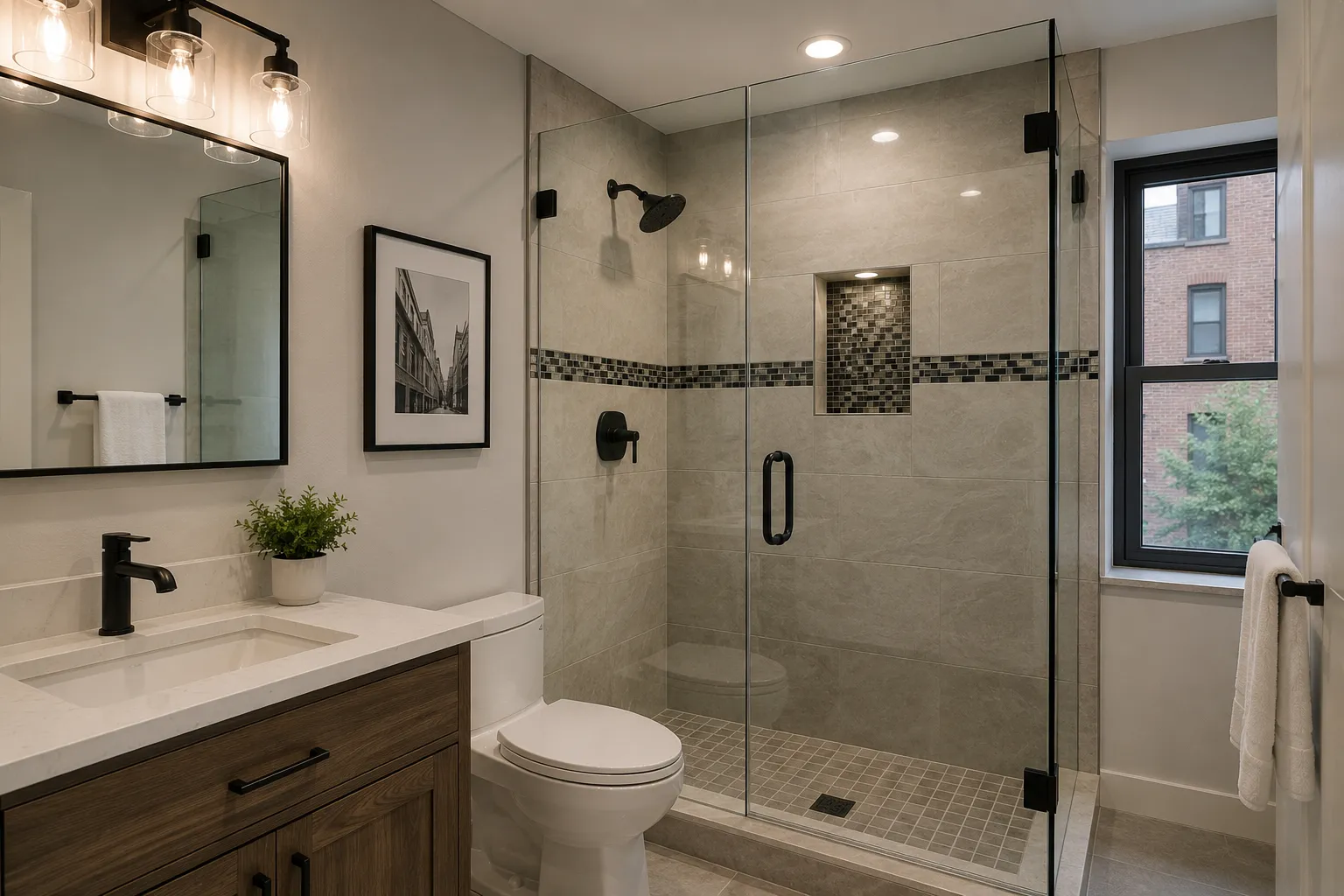
If you’re searching “replace shower door without replacing tile” online, here’s what you;ve got to know: You can do it this way if the existing tile is sound, the shower opening is suitable, and the old mounting points are properly handled. There’s no reason to tear apart a perfectly good bathroom just to install new glass, right?
In Rye we’ve seen plenty of bathrooms where the tile was still in good shape but the shower door was outdated, difficult to clean, or simply worn out. Replacing the door or enclosure can give the space a fresh look without turning the job into a full renovation. The trick is checking what you’re attaching the new glass to before ordering anything.
Condition of Existing Tile
Start with the tile and grout around the enclosure. Look for loose tiles, cracked corners, missing grout, and signs of water getting behind the finished surface. A new shower door won’t solve those problems. Pay particular attention to the areas where the old frame, hinges, and brackets are attached. If the tile is stable and the mounting surfaces are in good condition, replacement is usually more straightforward.
Does shower door removal damage tile? It doesn’t have to, but there’s always some risk when removing old tracks, screws, and sealant. The condition of the tile, the original installation, and the removal method all matter. Brittle tile or hardware that’s been heavily sealed in place needs extra care.
Old Fixing Holes and Hardware
When the old enclosure comes out, you may be left with screw holes, anchor points, and marks from the previous frame. That’s normal, especially when replacing framed shower doors with frameless glass.
Can shower door hardware holes be reused? Sometimes, but don’t count on it. The new enclosure may use different hinges or brackets, and their mounting requirements may not match the old holes. The installer also needs to confirm that any existing fixing point is suitable for the new hardware.
How to cover old shower door screw holes? Well, that depends on their location and condition. Some holes can be filled and finished with a suitable repair material; others may be hidden by new hardware or trim if the design allows. The important thing is to seal abandoned penetrations appropriately and avoid leaving a path for moisture behind the tile.
Waterproofing and Curb Checks
Before installing new glass, check the curb and the areas where the old enclosure was mounted. Look for damaged grout, cracked tile, deteriorated sealant, or signs of persistent moisture. Existing curb problems before new glass installation should be addressed rather than covered up with a fresh bead of silicone.
Also check the curb’s shape and slope. A new door or fixed panel has to work with the actual finished surface. If the curb is uneven or the walls aren’t plumb, the enclosure design may need to account for those conditions.
When a New Layout Is Possible
Can a shower door fit an existing opening? Usually, yes, provided the opening and mounting surfaces suit the chosen design. But changing the enclosure style can affect the work. For example, replacing sliding doors with a hinged door requires enough clearance for the door to swing without hitting a toilet, vanity, or nearby fixture. A frameless design may also require different mounting points and support.
Can you change sliding doors to hinged doors? Often, but it isn’t a simple swap of one piece of glass for another. The installer needs to check the opening, curb, wall support, and door clearance first. And can old shower glass be reused? Only if it’s suitable for the new layout and can be safely removed and installed again. In practice, custom glass is made for specific dimensions and hardware positions. Reusing it isn’t always practical, particularly when the opening or configuration is changing.
Before requesting an estimate, gather a few details:
- Photos of the entire shower, including the existing door and frame.
- Close-ups of hinges, tracks, brackets, and mounting points.
- Approximate opening width and height.
- Photos of the curb, tile, and any visible damage.
- Your preferred replacement style and hardware finish.
- Details of any leaks, loose tiles, or recurring sealant problems.
Ask whether the estimate includes removal and disposal of the old enclosure, installation of the new glass, hardware, and sealing. Clarify whether tile repairs, waterproofing work, or modifications to the curb are excluded.
This is also a good time to ask whether you need a complete enclosure replacement or just new seals. If the glass and hardware are in good condition but the door leaks because of worn seals, replacing the seals may be enough. If the frame is corroded, the door is damaged, or the enclosure no longer operates properly, a larger replacement may make more sense.