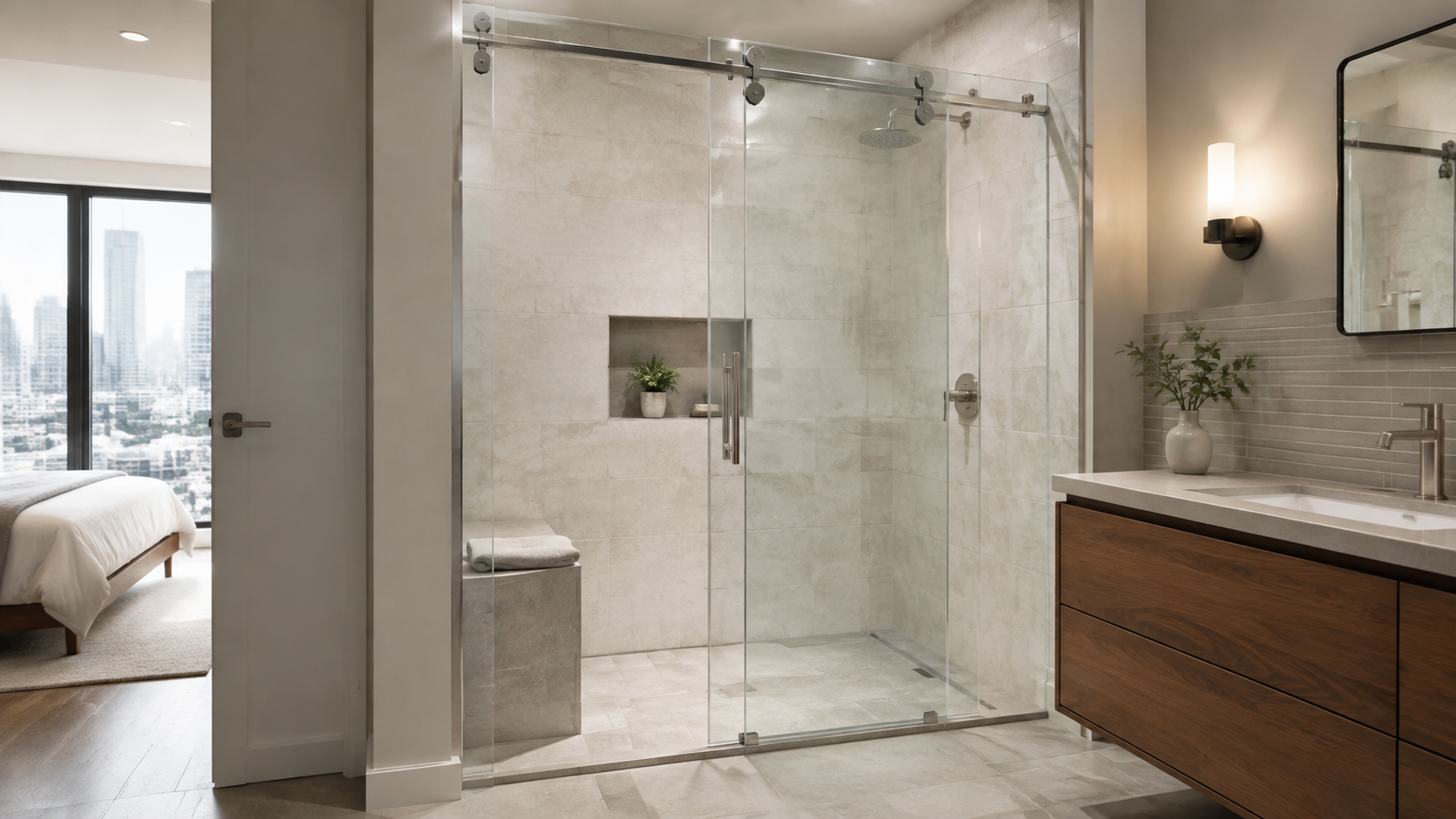
Shower glass thickness affects more than how substantial a door feels in your hand. It changes the panel’s weight, the hardware needed to support it, installation requirements, appearance, and overall cost. In a Greenwich bathroom, the right specification depends on the enclosure design and the size of the glass—not simply on choosing the thickest option available.
For many frameless shower enclosures, the common shower glass thickness comparison is 3/8-inch versus 1/2-inch glass, often described in metric specifications as approximately 10mm and 12mm. Both can work well, but they’re not interchangeable in every installation. Here’s what actually changes.
Common Thickness Specifications
You’ll commonly encounter these options:
- 1/4 inch (about 6mm): Often used in framed or track-supported shower doors, where the surrounding frame provides structural support.
- 3/8 inch (about 10mm): A common specification for frameless shower doors and fixed panels.
- 1/2 inch (about 12mm): A heavier option used in certain larger or more demanding frameless configurations.
The metric and imperial labels are nominal specifications, not always exact conversions. For example, 3/8 inch is approximately 9.5mm, while 1/2 inch is approximately 12.7mm. Always check the actual glass specification rather than relying on a rounded label.
In a 3/8 vs 1/2 inch shower glass comparison, the difference isn’t just an extra eighth of an inch. The thicker panel carries noticeably more weight, which affects everything supporting it.
Panel Size and Support
How shower panel size affects thickness comes down to height, width, total glass area, and how the panel is supported. A small fixed panel held along multiple edges has different requirements from a tall, wide panel with an exposed corner.
Fixed panels and moving doors also have different jobs. A fixed panel may be secured with clips, channels, or other supports. A hinged door needs to carry its own weight through the hinges and mounting structure.
What supports heavy shower glass? Properly selected brackets, channels, hinges, and suitable structural backing all play a part. The tile is the finished surface, not a substitute for adequate support behind it.
Door Weight and Hardware
Here’s where the difference becomes very practical. Shower glass thickness and door weight are directly connected.
| Thickness | Approximate weight |
| 3/8 inch (about 10mm) | 4.9 lb |
| 1/2 inch (about 12mm) | 6.5 lb |
That means a larger door made from 1/2-inch glass can put considerably more load on its hinges than the same door made from 3/8-inch glass.
Does thicker shower glass need different hinges? It may. Hinges must be rated for the specific glass thickness, door width, and total weight. Some models accommodate both thicknesses with different gaskets or configurations; others have more specific requirements.
Can existing hinges hold thicker glass? Don’t assume so. Check the manufacturer’s specifications and have the fabricator confirm the hardware capacity. The mounting points and wall reinforcement matter just as much as the hinge itself.
How Thickness Affects Appearance
Thicker glass has a more substantial edge and can give a frameless enclosure a heavier visual presence. Some homeowners like that solid, substantial look while others prefer the cleaner, lighter appearance of a thinner panel. There’s also the question of edge color. Standard clear glass can show a subtle green tint along exposed edges because of iron content. Greater thickness can make that tint more noticeable. Low-iron glass reduces the green appearance and offers a more neutral look.
One thing worth remembering: thickness doesn’t determine clarity by itself. Glass type, iron content, and finish all influence the final appearance. If you’re choosing between 10mm and 12mm shower glass, ask to see samples rather than judging from a photograph.
Before approving an estimate, ask a few practical questions:
- Why is this thickness recommended for my panel dimensions?
- Is the glass tempered safety glass, and what exact thickness is specified?
- How much will the finished door weigh?
- Are the proposed hinges and brackets rated for that weight?
- Does the wall have suitable reinforcement at the mounting points?
- Are the glass edges polished, and what glass clarity options are available?
- Would a different thickness change the price or hardware selection?
Why does shower glass thickness affect price? More glass material is one factor, but heavier panels can also require different hardware and additional installation considerations. Ask for the glass and hardware specifications separately so you can understand what you’re paying for.
Сhoose shower glass thickness based on the enclosure you’re building, not a sales pitch about bigger numbers. A well-designed 3/8-inch installation can do its job beautifully, while a larger panel may call for something heavier. Get the dimensions, support, and hardware right, and you’ll have a shower enclosure built to work as intended.