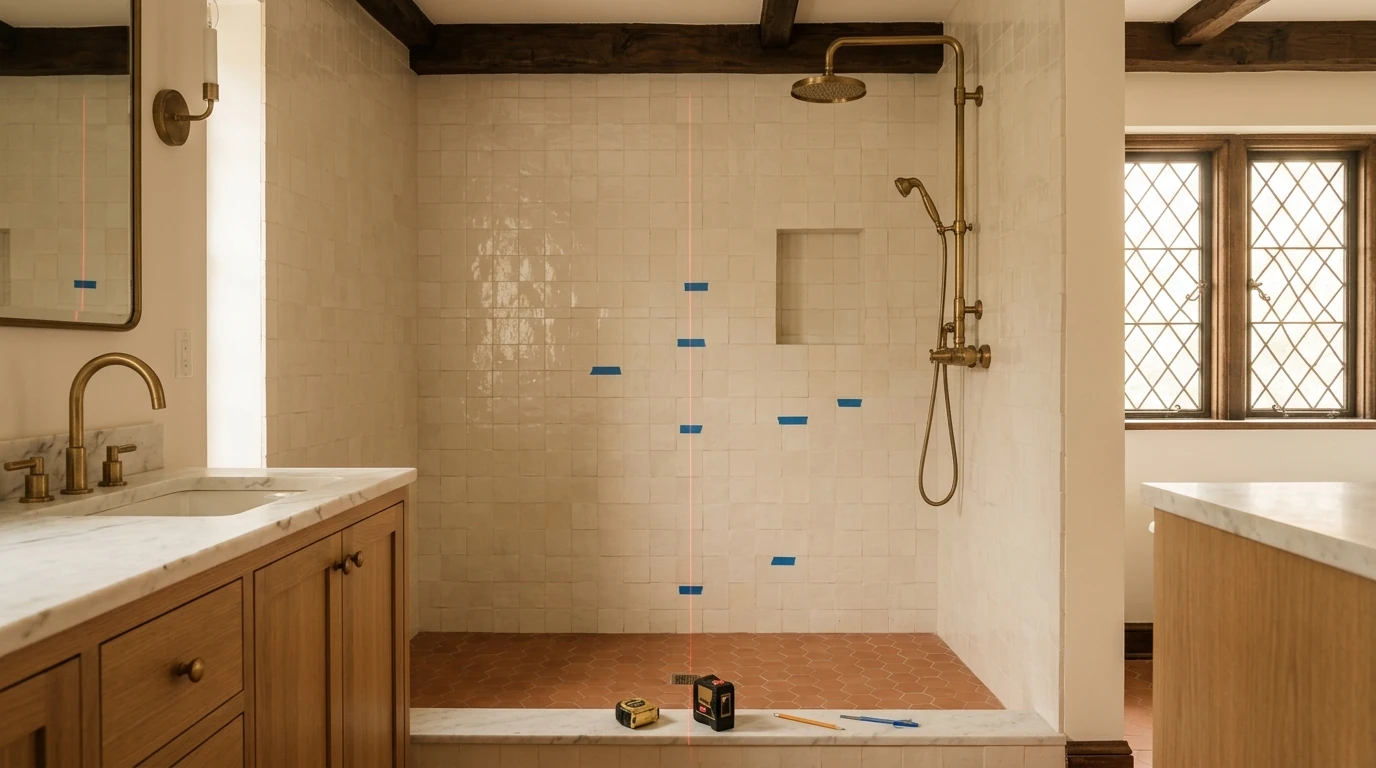
A question we hear every once in a while: “When to measure for shower glass?” Well, if you’re remodeling a bathroom in Bronxville, start planning your shower glass before the tile work is finished, but don’t rush the final measurement. The right time to measure for shower glass is usually after the tile, curb, and other finished surfaces are installed. That’s when the installer can measure the actual opening the glass will fit into, rather than guessing how the completed shower might look.
You can absolutely discuss the enclosure style, hardware, and approximate dimensions earlier in the remodel. Just understand the difference between preliminary planning measurements and the final field measurements used for custom fabrication. They’re two different steps, and mixing them up can get expensive.
Preliminary Planning Measurements
Early measurements are useful. Your contractor or glass installer can look at the planned shower layout, estimate the opening size, and help you decide whether you want a hinged door, sliding enclosure, fixed panel, or a combination. This is also the time to think about door swing, handle placement, glass appearance, and hardware finishes. Don’t wait until the bathroom is practically done to decide you want a different configuration. That can affect tile layout, clearances, and where support needs to go.
Preliminary measurements aren’t fabrication dimensions, though. During construction, framing can change, backer board adds thickness, and tile brings the finished walls inward. That’s why the rough opening vs. finished opening for shower doors matters. The rough opening is the construction space before finish materials, the finished opening is the actual space left after those materials are installed.
Can shower glass be ordered from plans? Plans can help with budgeting and early coordination, sure. They’re not a substitute for final measurements at the property.
Finished Tile and Curb Conditions
Here’s where the tape measure really earns its keep. Shower glass measurement after tile installation gives the installer the surfaces the enclosure will actually meet. A wall might look straight before tile but end up slightly out of plumb once everything is finished. Tile thickness, mortar, and the way the installer handles corners can all affect the opening. Even a small variation matters when you’re fitting custom glass into a tight space.
The curb needs attention, too. Check its width, height, slope, and level across the area where the glass or door will sit. A shower curb measurement checklist should include:
- Finished curb width and depth
- Whether the top surface is level from side to side
- The slope toward the shower drain
- The exact position of the curb relative to the walls
- The finished tile edges and any trim pieces
Why do finished shower dimensions matter? Because the glass has to fit the real opening, not the dimensions someone wrote down before the tile setter arrived. If tile changes after glass measurement, the installer may need to measure again. Don’t treat that as unnecessary fussing. It’s how you avoid ordering a panel that no longer fits.
Hardware Support Checks
Before finalizing the enclosure, confirm that the walls can support the hardware. Hinged glass doors put loads on their mounting points, and the installer needs to know what’s behind the finished surface. If the design calls for hinges mounted to a wall, confirm that suitable blocking or reinforcement was planned during construction. The same goes for certain brackets and other mounting hardware. Tile alone isn’t a substitute for proper structural support.
This is also the time to choose shower door hardware. Decide on the general hinge style, handle, finish, and door configuration before the final specification is approved. The exact hardware can affect clearances and mounting requirements, so don’t leave every decision until the glass is already being prepared.
Final Measurement and Signoff
What happens at a shower glass measurement appointment? The installer checks the completed opening, measures the height and width at relevant points, examines wall alignment, checks the curb, and reviews the proposed panel and door positions. They’ll also look at practical details: nearby fixtures, the door’s swing path, handle clearance, and the locations where hinges or brackets will attach. This is where how wall plumb affects shower door measurement becomes clear. If a wall leans, the glass may need to be specified with the actual angle and gaps in mind.
Before approving fabrication, review the enclosure drawing or written specifications. Confirm the glass dimensions, layout, hardware, finish, and door direction. This is your shower glass fabrication approval checklist. If something looks different from what you discussed, stop and ask.
How to prepare for shower door measurement? Clear the shower area, make sure the tile and curb are complete, and have the preferred enclosure design ready. Photos of the finished shower from straight on and from both sides can help with the initial quote, along with approximate dimensions. But photos don’t replace the installer’s field measurements.
Before Fabrication Starts
A proper order keeps the remodel moving without forcing the glass company to guess:
- Plan the enclosure early: Discuss the layout, door style, approximate opening, and hardware preferences.
- Coordinate with the tile contractor: Confirm finished wall positions, curb dimensions, and any reinforcement needed for the glass.
- Finish the shower surfaces: Complete tile, grout, curb, and other surfaces that affect the opening.
- Schedule final field measurements: Have the glass installer check the actual finished conditions.
- Review and approve the specification: Confirm dimensions, glass, hardware, and configuration before fabrication begins.
When to order custom shower glass? Start discussing the order during the planning stage, but wait for final measurements before approving fabrication. That gives you time to make decisions without gambling on unfinished dimensions.
Can you reuse old shower door measurements? You can use them as a rough reference, but don’t rely on them for a new custom enclosure. Even if the shower looks unchanged, tile work, replacement materials, or small adjustments can alter the opening. Measure the current finished space.