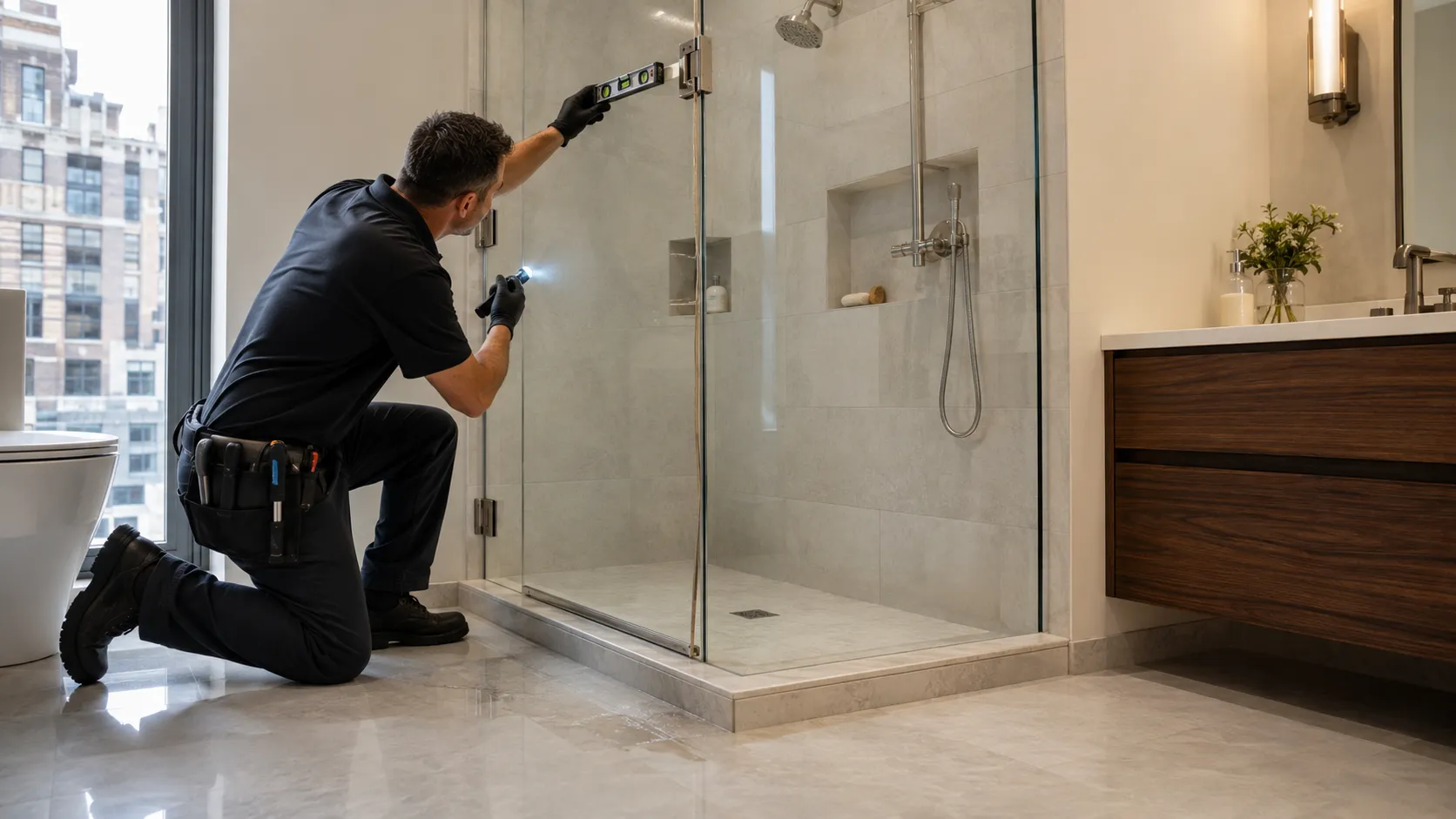
Most people don’t wake up one morning and decide to call a shower door professional. It happens more gradually than that. A slightly stiff hinge here. A door that used to close with one motion and now needs two. A faint cloudiness on the glass that a bottle of cleaner used to fix and, for some reason, no longer does.
None of it feels urgent in the moment. Showers are forgiving that way. They let small problems sit quietly for months, sometimes years, before anyone stops and actually looks at what’s going on.
The tricky part is that shower doors rarely fail all at once. They send small signals instead — a sound that wasn’t there before, a puddle that keeps showing up, a handle that wiggles a little more than it used to. Each one is easy to explain away on its own. Together, they’re usually worth a second look.
Your Glass Won’t Come Clean Anymore
A little cloudiness after a busy week is normal. Mineral deposits, soap film — a good cleaner and a microfiber cloth usually handle it.
But if the same haze keeps coming back within days, or a proper cleaning barely makes a difference anymore, that’s a different situation. It could be buildup that’s gone past the point of a home fix, coating wear, etching, or something else entirely happening at the surface of the glass. Not something you can diagnose by squinting at it under bathroom lighting.
A professional can actually tell you what’s happening under all that cloudiness — and whether it’s something worth fighting for, or whether the glass has simply had enough.
The Door Sticks, Drags, or Won’t Close Flush
A door is supposed to glide. One motion, done. The moment it starts needing a shove, a little lift, or that slightly embarrassed “you have to kind of wiggle it” explanation for guests, it’s telling you something.
It won’t fix itself by tomorrow, and it definitely won’t fix itself by being wrestled with. A door that’s already dragging has a habit of getting worse, never better, and the more it gets forced, the more likely it is to hand you a second problem to go with the first one. Better to have someone look at it now, while it’s still a small conversation instead of a bigger one.
You Notice a Chip, Crack, or Sharp Edge
Tempered glass has a strange kind of confidence. It holds up beautifully for years — right up until the moment it doesn’t, and then it doesn’t do anything halfway. No slow decline, no fair warning. Just fine, then not.
So that little chip near the edge, the one that looks like nothing? It might genuinely be nothing. Or it might not be. Glass doesn’t really give you an easy way to tell just by looking at it.
This is one sign on this list worth acting on right away rather than watching to see how it develops. A professional can assess whether the panel needs to be replaced — and it’s not something worth attempting as a home repair.
Water Keeps Escaping the Enclosure
A little water outside the shower now and then is normal. A towel on the floor every single day is not.
Persistent leaking usually means a seal or sweep has worn down, or the door has shifted just enough to send water somewhere it didn’t used to go. It’s easy to treat this as a mopping-up chore rather than a symptom, but water finding its way past the enclosure regularly tends to affect flooring and walls over time — the kind of damage that’s a lot more disruptive to fix than the leak itself would have been.
Hardware Feels Loose, Noisy, or Corroded
Handles and hinges take on more daily wear than almost anything else in the bathroom, and they don’t always fail quietly.
A handle that wiggles when you grab it. A hinge that’s started making a sound it didn’t used to make. Visible corrosion or pitting on the metal. A door that feels like it’s sagging slightly on its hinges. None of these are things to wait out — they’re usually early signals that hardware is nearing the end of its useful life, and catching them early is generally a much smaller fix than catching them late.
Your Bathroom Has Been Renovated, But the Shower Door Hasn’t
Not every sign is mechanical. Sometimes the shower door itself is working just fine — it just no longer belongs in the room around it.
If the tile, vanity, and fixtures have all been updated but the enclosure is still the one from years ago, that mismatch is its own kind of signal. It’s a good moment to have a professional take a look at whether the existing door still makes sense, or whether it’s time to talk about frameless shower enclosures that actually fit the updated space.
The Bottom Line
Shower doors rarely announce a problem clearly. They send small signals — a stiffer hinge, a bit of persistent haze, water where it shouldn’t be — and it’s easy to explain each one away individually. Together, they’re usually worth a second look.
If any of this sounds familiar, it’s a good time to talk to a professional rather than wait for the next small sign to show up. Schedule a free consultation and we’ll take a proper look at what’s actually going on with your enclosure.